
Adding EV charging to your property can sound like a much bigger project than you had in mind. You start thinking about a few parking spaces, and suddenly you’re hearing about electrical panels, transformers, and bringing more power into the building.
Before you assume those upgrades are unavoidable, there’s another option worth exploring: making better use of the electricity your property already has.
Depending on your building and how people will use the chargers, you may be able to add EV charging without a major electrical service upgrade. The U.S. Department of Energy identifies smart charge management as one way to work within existing electrical capacity and reduce the need for certain upgrades.
What does “electrical capacity” actually mean?
Think of electrical capacity as your property’s power budget. Lights, heating and cooling, equipment, and other electrical systems all use a portion of that budget.
Adding EV chargers adds another demand. But the important question is how much electricity everything needs at the same time.
A workplace might use more power during business hours and less after employees leave. Other properties have different patterns. Understanding those patterns is part of figuring out whether charging can fit.
An electrical assessment helps establish what your property can safely support. DOE recommends involving your utility and a qualified electrical contractor early in the planning process.
Chargers don’t always need to run at full speed
It’s easy to assume that every EV charger should deliver as much power as possible. In practice, the right charging speed depends on how long a vehicle stays parked and how much energy it needs before leaving.
Consider someone who plugs in at work and leaves eight hours later. Their needs are different from those of a highway traveler making a short stop. An apartment resident parked overnight may also have time for a slower charge.
That’s why a useful starting question is: How much charging do drivers need during the time they’re here?
For homeowners with limited capacity, the EPA specifically suggests considering a lower-powered Level 2 charger, a common type of charger used at homes and businesses, along with load-management options.
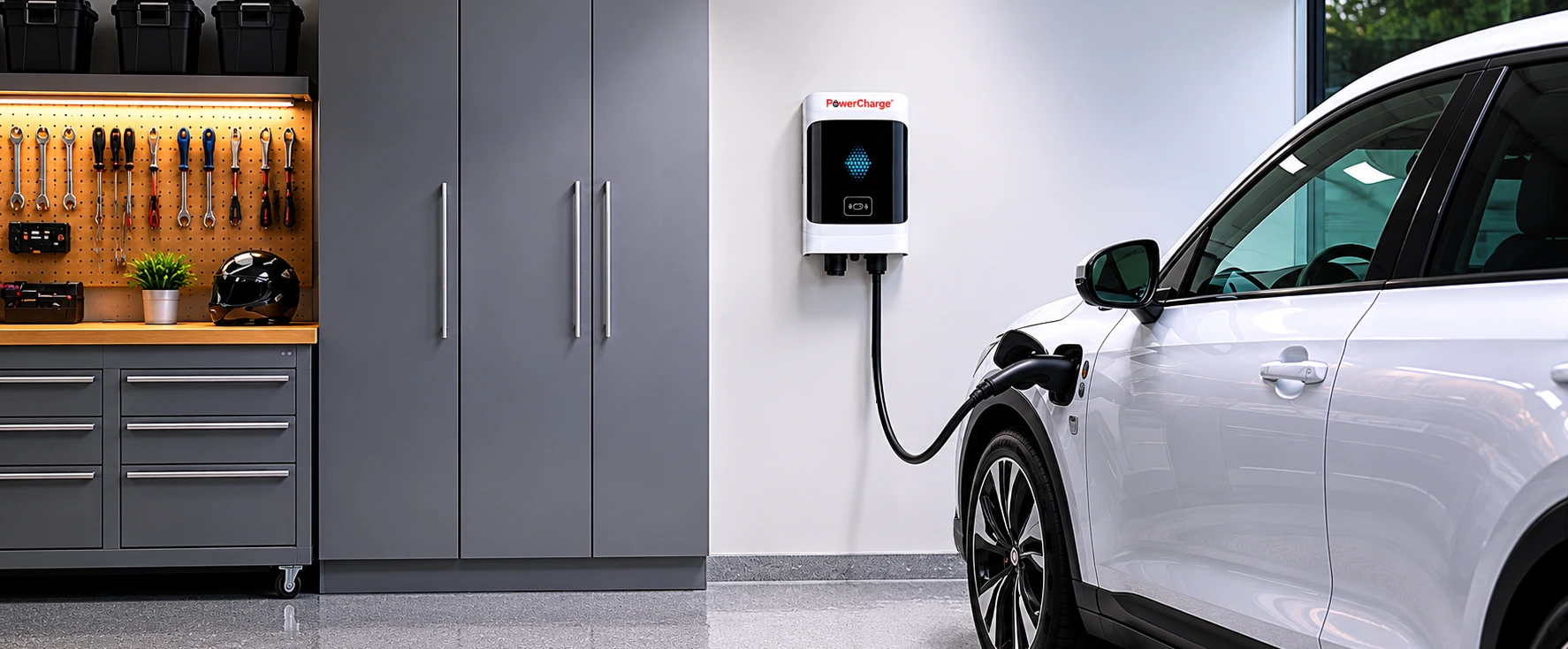
Installing an EV charger at home?
Home charging may be more familiar than you think. A Level 2 home charger uses 240-volt electricity—the same voltage used by a typical electric clothes dryer. You don’t necessarily need a whole new electrical service just because you’re adding an EV.
Depending on your home’s existing capacity, the project may involve having an electrician install a properly sized circuit from your electrical panel to your garage or driveway. If capacity is limited, a lower-powered charger or a load-management system may help you charge without a major upgrade.
Some drivers can even meet their daily needs with a slower Level 1 charger, which uses a standard 120-volt household outlet on a suitable dedicated circuit.
The best starting point is how far you drive each day and how long your car stays parked at home. An electrician can then help determine what your home can support and whether any changes are needed.
Installing an EV charger at an office, in public, at a multi-family unit? How load management helps
“Load management” sounds technical, but the idea is straightforward: control how much electricity the chargers use and when they use it.
Depending on the system, that can happen in several ways.
Sharing power between chargers. Multiple chargers work within a set power limit. When more vehicles plug in, the system divides the available power. As vehicles finish charging, it can give more power to those still charging.
Adjusting to the building’s needs. Some systems monitor the building’s electricity use and adjust charging accordingly. When other equipment needs more power, charging slows down or pauses. When more capacity becomes available, charging can increase.
Planning around departure times. Compatible systems can help prioritize vehicles that need to leave sooner, rather than treating every plugged-in vehicle the same.
The tradeoff is simple: sharing power can mean slower charging when demand is high. The system needs to be designed around what drivers actually need.
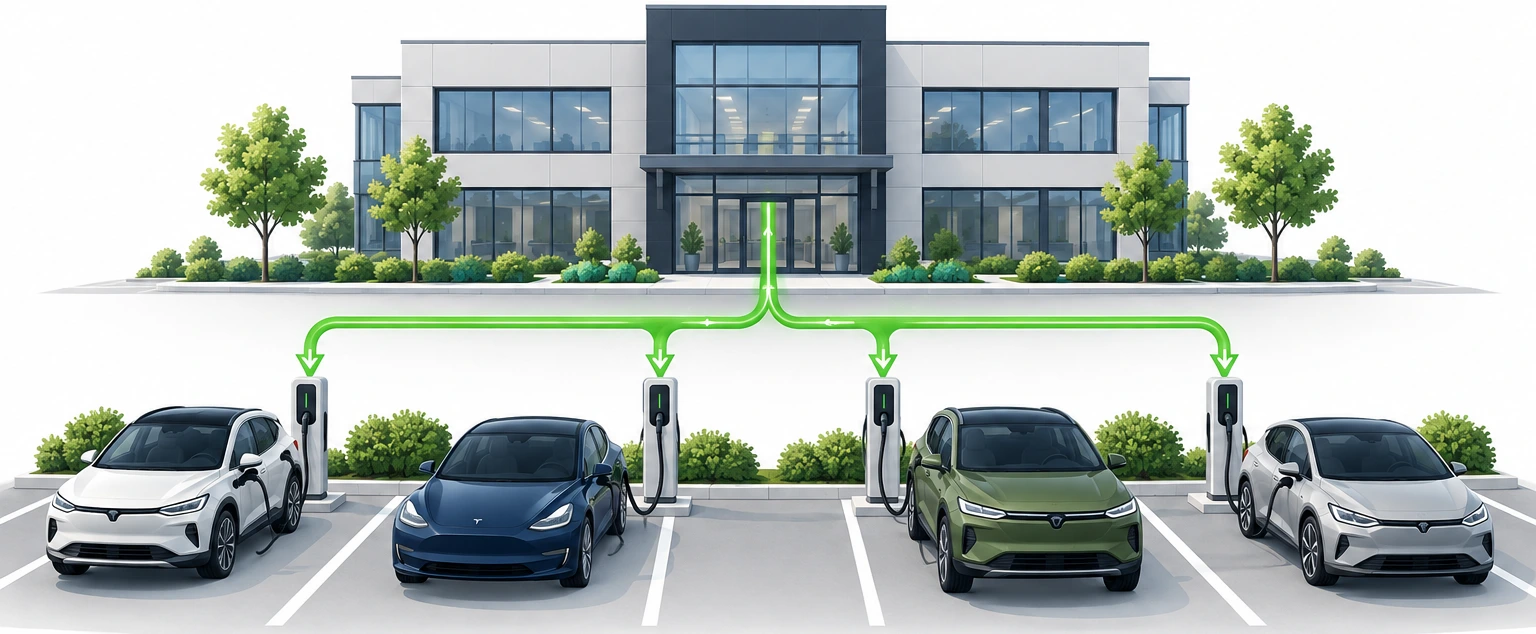
A simple example
Imagine an office wants four chargers. An electrical assessment determines that the site can allocate 20 kilowatts of power to charging. Kilowatts are simply a way to measure how quickly electricity is being delivered.
With a compatible power-sharing system, four vehicles could each receive about 5 kilowatts while charging together. As some finish, the system could redistribute the available power to the others.
This is an illustration, not a design recommendation. Actual results depend on the chargers, vehicles, and electrical system. It shows why installing four charging ports doesn’t necessarily mean providing enough power for all four to operate at maximum output simultaneously.
Will this eliminate every electrical expense?
There will still be installation costs. Your project may need wiring, circuits, permits, or other electrical work. Load-management equipment and software can also add costs.
The opportunity is to compare those costs with the cost of a larger electrical upgrade. DOE’s planning guidance recommends evaluating both installation expenses and ongoing operating fees.
Some sites will still need additional capacity. If vehicles need substantial energy in a short time, slowing or staggering charging may not meet their needs.
A charger with an app or Wi-Fi connection also isn’t automatically a complete load-management solution. Confirm what the equipment can control and whether it is suitable for your site. Simply setting a timer is not the same as having a system designed to keep charging within electrical limits.
Start with your needs and a site assessment
Before choosing equipment, consider:
- How many vehicles will need to charge?
- How long will they usually stay parked?
- How much charging will they need before leaving?
- Will you want to add more chargers later?
Bring those answers to your charging provider and electrical contractor. They can help evaluate whether lower charging output, power sharing, or another approach makes sense.
Concerned that electrical upgrades will put EV charging out of reach? Contact EV Charge Solutions to discuss your property, your charging goals, and equipment options that support load management. A little planning can help you understand what’s possible before you commit to a larger project.