
As more school districts evaluate electric school buses, one question comes up repeatedly:
Are electric school buses actually less expensive than diesel buses?
The honest answer is: It depends.
While electric buses can offer meaningful long-term operating savings, the total financial picture varies depending on factors such as electricity costs, utility infrastructure, available funding, climate, route lengths, maintenance practices, and fleet operations.
Rather than assuming every district will experience identical results, it's important to understand where electric buses may provide advantages and where challenges still exist.
Initial Purchase Cost
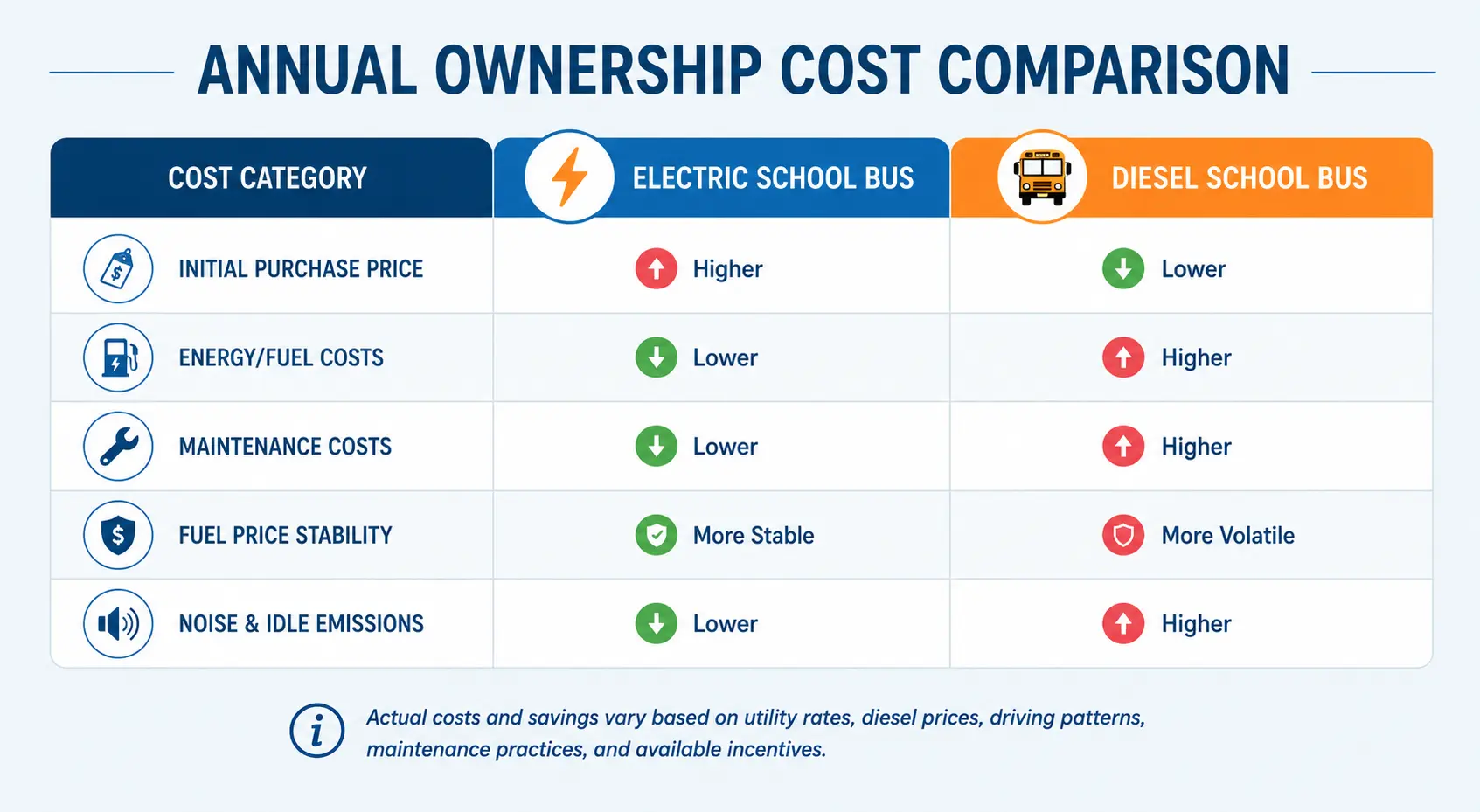
Today, electric school buses generally have a higher upfront purchase cost than comparable diesel models.
However, many school districts are able to significantly reduce both vehicle and infrastructure costs through available federal, state, and utility funding programs. These incentives can help offset expenses associated with purchasing electric buses, installing charging equipment, and completing necessary electrical upgrades.
When evaluating the total cost of an electric school bus project, it's also important to include infrastructure investments such as EV chargers, electrical service upgrades, transformers, and site construction.
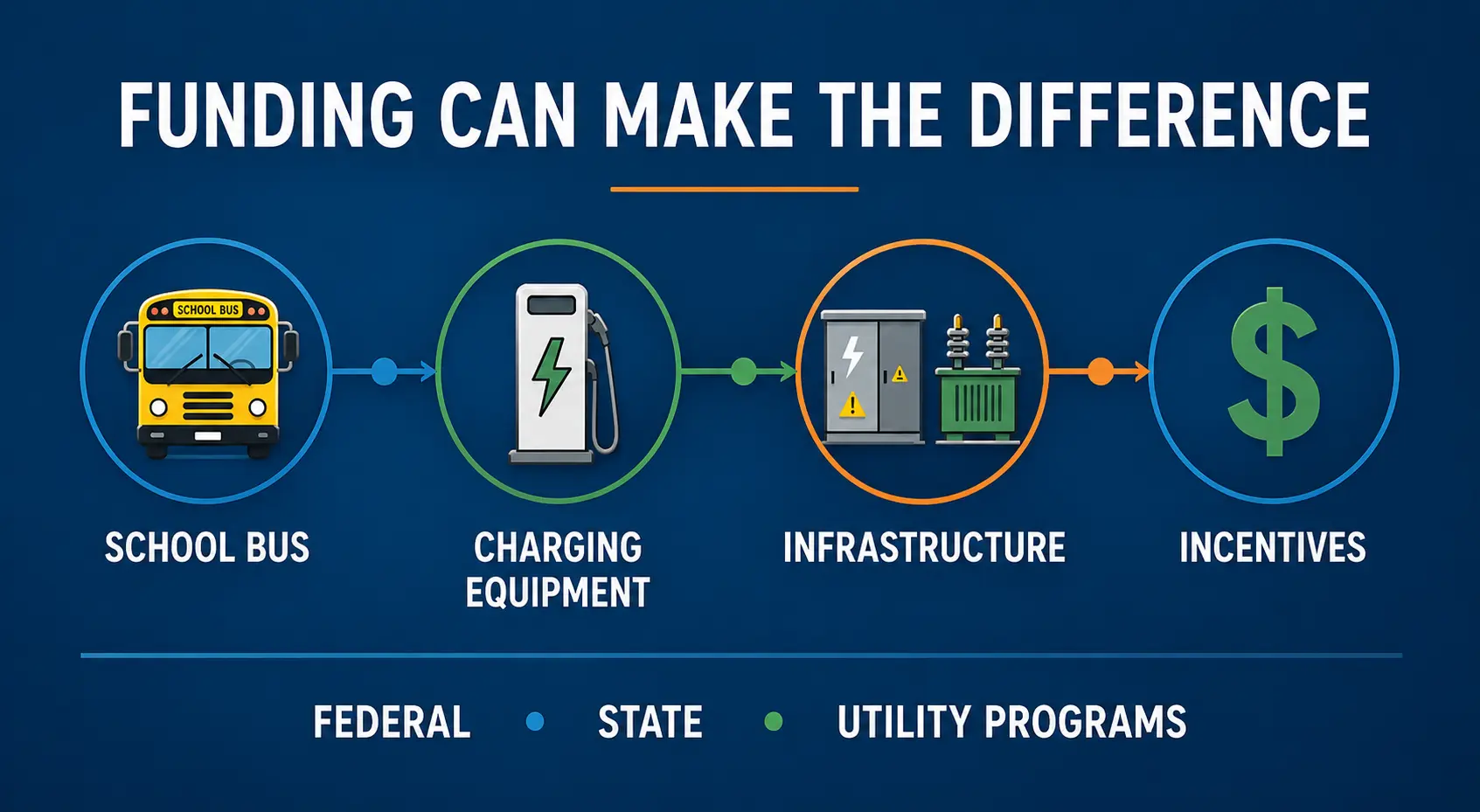
Take New York State for Example: New York's NYSERDA School Bus Incentive Program (NYSBIP) helps school districts and eligible fleet operators transition to electric school buses by providing funding for electric buses, Level 2 charging stations, DC Fast Chargers, and many associated electrical infrastructure and installation costs.
Fuel Costs
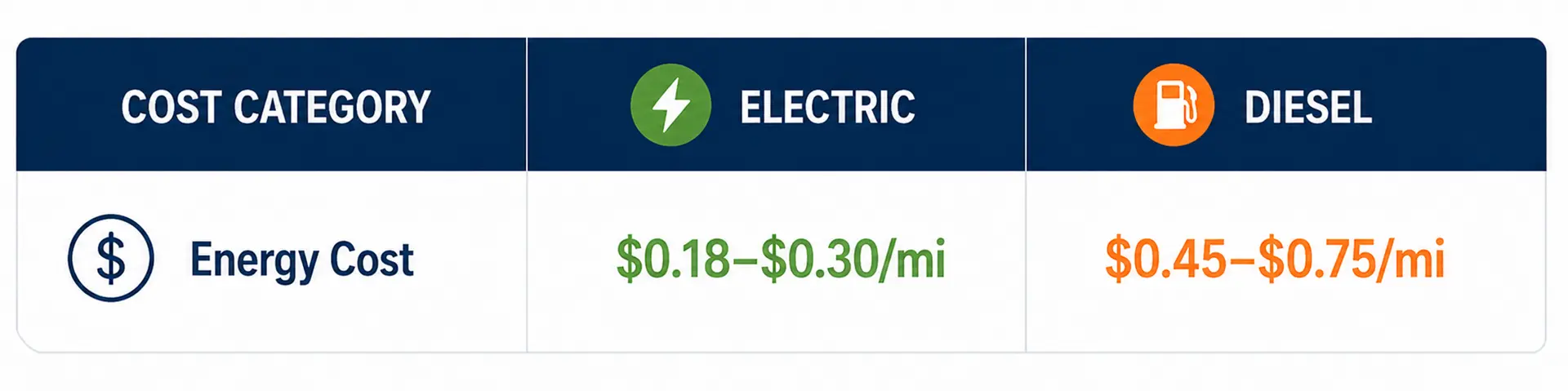
Electricity is often less expensive and less volatile than diesel fuel.
Depending on local utility rates, districts may reduce operating expenses by charging buses overnight during off-peak hours.
However, electricity pricing varies by utility and demand charges may influence overall operating costs.
Maintenance
Electric buses contain fewer moving mechanical components than diesel vehicles.
Potential maintenance advantages may include:
- No engine oil changes
- No fuel filters
- No exhaust after-treatment systems
- Fewer belts
- Reduced engine-related repairs
- Regenerative braking that can reduce brake wear
However, electric buses still require routine maintenance, including:
- Tires
- Suspension
- HVAC systems
- Steering components
- Cooling systems
- Battery monitoring
- Software updates
Maintenance requirements are different, not eliminated.
Operating Efficiency
Electric drivetrains convert a larger percentage of stored energy into vehicle movement than internal combustion engines.
Benefits may include:
- Smooth acceleration
- Quiet operation
- Reduced idling
- Lower energy waste
- Improved driver experience
Route planning remains important, particularly in districts with longer daily mileage or demanding terrain.
Battery Life
Battery longevity is another common consideration for school districts evaluating electric buses.
Most electric school bus manufacturers design battery systems to last for many years of daily fleet operation, and many batteries are backed by long-term warranties. While battery replacement is a future cost that districts should understand, many fleets are expected to operate for years before significant battery degradation affects daily routes.
As battery technology continues to improve, replacement costs are also expected to decline over time.
Cold Weather Performance
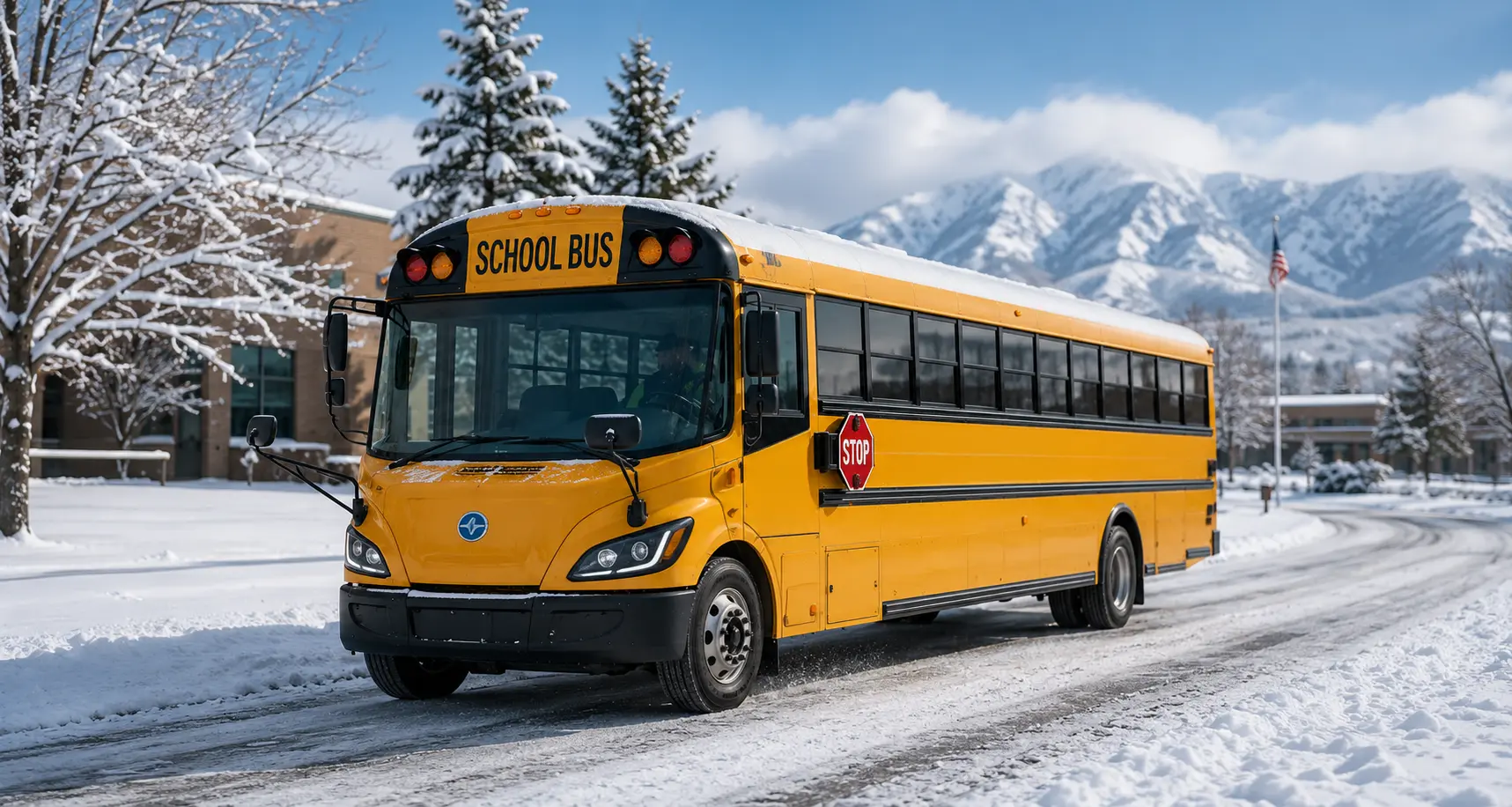
Cold-weather performance is one of the most common questions school districts ask about electric buses.
Battery performance can decline in colder temperatures, and cabin heating increases energy consumption.
Many modern electric buses include thermal management systems that help mitigate these effects, but districts in northern climates should account for seasonal range differences when planning routes and charging schedules.
Infrastructure Requirements
Unlike diesel fueling, electric fleets require permanent charging infrastructure.
That includes:
- Utility coordination
- Electrical engineering
- Chargers
- Transformers
- Networking
- Construction
- Cable management
Planning infrastructure early is often one of the biggest factors in a successful deployment.
"Planning EV charging infrastructure doesn't have to be overwhelming. Whether you're installing chargers for a single school or transitioning an entire school bus fleet, EV Charge Solutions can help simplify the process by providing the charging equipment, infrastructure solutions, and project support needed for a successful deployment."

Environmental Considerations
Electric buses produce zero tailpipe emissions during operation.
This can improve local air quality around schools and reduce student exposure to diesel exhaust.
The overall environmental impact depends partly on how electricity is generated within a region, but many utilities continue increasing renewable energy generation each year.
So Which Is Better?
There isn't a universal answer.
For some districts, electric buses may deliver meaningful long-term savings and operational benefits.
For others, infrastructure costs, route requirements, or electrical limitations may mean a phased transition is the more practical approach.
Every district's transportation needs are unique, and successful projects begin with careful planning rather than assumptions.
Whether you're planning your first electric school bus charging project or expanding an existing fleet, EV Charge Solutions can help simplify the process with charging equipment, infrastructure solutions, and project support designed to keep your project moving forward with confidence.
*This article was developed by the EV Charge Solutions team, drawing on industry research and our experience supporting EV charging infrastructure projects for schools, fleets, businesses, and public organizations across North America.
in Case Studies